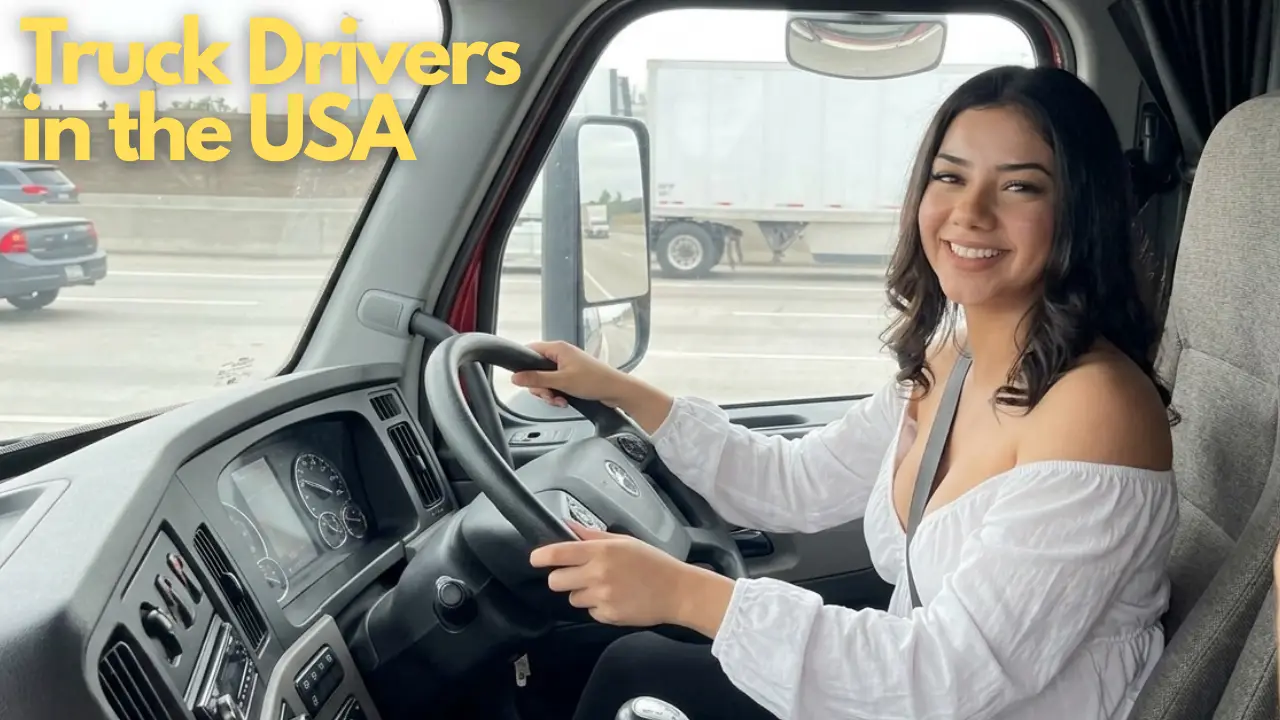
Truck driving is one of the most important occupations in the United States transportation industry. Millions of products, food items, construction materials, vehicles, and other goods are transported across the country every day by professional truck drivers.
For people looking for a career that does not necessarily require a four-year college degree, truck driver jobs in the USA can be an attractive option. Heavy and tractor-trailer truck drivers typically need a Commercial Driver’s License (CDL), appropriate training, and a safe driving record.
According to the U.S. Bureau of Labor Statistics, the median annual wage for heavy and tractor-trailer truck drivers was $57,440 in May 2024. Employment in this occupation is projected to grow 4% from 2024 to 2034, with approximately 237,600 openings expected each year, largely because of workers leaving the occupation or retiring.

What Does a Truck Driver Do?
A truck driver’s main responsibility is transporting cargo safely from one location to another. Depending on the position, a driver may travel within a local area, between states, or across the country.
Typical responsibilities include:
- Inspecting the truck before and after trips
- Loading or checking cargo
- Driving long distances safely
- Following federal and state transportation regulations
- Maintaining delivery schedules
- Communicating with dispatchers
- Completing delivery paperwork
- Reporting vehicle problems
- Securing cargo properly
- Following required driving and rest regulations
Long-haul drivers may spend several days or weeks away from home, while local drivers can often return home every day.
Types of Truck Driver Jobs in the USA
There are several different types of trucking jobs, and the best option depends on your experience, lifestyle, and CDL qualifications.
1. Over-the-Road (OTR) Truck Driver
OTR drivers typically travel long distances across multiple states. These positions can offer competitive earning opportunities but may require drivers to spend extended periods away from home.
2. Regional Truck Driver
Regional drivers operate within a particular geographic area. They may travel through several states but generally have shorter routes than OTR drivers.
3. Local Truck Driver
Local drivers usually operate within a city or nearby region. One of the biggest advantages is the possibility of returning home more frequently, although schedules can vary considerably between employers.
4. Owner-Operator
An owner-operator owns or leases their truck and works independently or under a carrier. This can provide greater control over routes and business decisions, but it also means taking responsibility for expenses such as fuel, maintenance, insurance, permits, and other operating costs.
5. Specialized Truck Driver
Specialized trucking can involve transporting oversized loads, tankers, hazardous materials, automobiles, or other specialized cargo. Additional endorsements or qualifications may be required depending on the type of vehicle and cargo.

Truck Driver Salary in the USA
Truck driver pay varies significantly depending on experience, location, type of trucking, employer, mileage, routes, and specialized qualifications.
The BLS reported a median annual wage of $57,440 for heavy and tractor-trailer truck drivers in May 2024. Individual drivers can earn more or less than this amount depending on their position and compensation structure.
Some employers pay drivers by:
- Mileage
- Hour
- Delivery
- Percentage of freight revenue
- Salary
- A combination of different compensation methods
Drivers should always look at the complete compensation package rather than focusing only on an advertised salary. Benefits, bonuses, home-time policies, detention pay, insurance, retirement plans, and equipment can also make a significant difference.
CDL Requirements for Truck Drivers
Most professional truck driving positions require a Commercial Driver’s License (CDL). The Federal Motor Carrier Safety Administration (FMCSA) establishes federal standards, while individual states issue CDLs and administer their licensing processes.
There are three primary CDL classes:
- Class A: Generally covers combinations of vehicles such as tractor-trailers when they meet the applicable federal weight requirements.
- Class B: Generally covers qualifying single vehicles weighing 26,001 pounds or more, with certain towing limitations.
- Class C: Covers certain vehicles that do not meet Class A or B definitions but meet specific passenger or hazardous-material requirements.
For many tractor-trailer driving careers, a Class A CDL is the key qualification.
How to Get a CDL
The process can vary by state, but the federal framework generally involves several steps.
Step 1: Obtain a Commercial Learner’s Permit
Applicants generally begin by obtaining a Commercial Learner’s Permit (CLP). The state checks eligibility and driving records, and applicants may need to provide documentation and meet applicable medical requirements.
Step 2: Complete Required Training
Applicants seeking a first-time Class A or Class B CDL generally need to complete federally required Entry-Level Driver Training (ELDT) with a registered training provider before taking the applicable skills test.
Step 3: Take the CDL Skills Test
After meeting the applicable requirements, applicants take the CDL skills examination. The federal framework includes:
- Vehicle inspection
- Basic vehicle control
- Road driving
A CLP generally must be held for at least 14 days before the applicant can take the CDL skills test.
Because states administer CDL licensing, applicants should always check their state’s current CDL manual and requirements.
Medical Requirements
Commercial drivers may also need to meet federal medical certification requirements.
FMCSA states that commercial drivers operating certain vehicles in interstate commerce must maintain a valid Medical Examiner’s Certificate. CDL holders also have to self-certify their type of commercial operation with their state licensing agency.
Medical requirements can depend on the type of commercial driving being performed, so applicants should verify their specific situation before starting the licensing process.
CDL Endorsements
Some trucking jobs require additional endorsements.
Depending on the vehicle or cargo, endorsements may be needed for:
- Tank vehicles
- Double or triple trailers
- Hazardous materials
- Passenger vehicles
- School buses
These endorsements can expand the types of jobs a driver is qualified to perform.

Do You Need Truck Driving Experience?
Not necessarily.
Many trucking companies recruit entry-level drivers, while other positions require previous commercial driving experience. New drivers may begin with entry-level or training programs and build experience before moving into specialized or higher-paying positions.
Experience can become especially valuable for jobs involving specialized equipment, difficult routes, hazardous materials, oversized loads, or other demanding operations.
What Employers Look For
Truck driving companies commonly look for candidates who demonstrate:
- A valid CDL appropriate for the position
- A safe driving history
- Reliability and punctuality
- Good communication skills
- Ability to follow safety procedures
- Ability to complete required paperwork
- Willingness to work flexible schedules
- Physical ability to perform job duties
- Professional behavior with customers and dispatchers
A clean driving record can be particularly important because serious traffic violations can affect a driver’s CDL status.
Truck Driver Jobs for New Drivers
People without previous professional trucking experience can consider entry-level opportunities.
A typical path may look like:
CDL training → CLP → ELDT → CDL skills test → First trucking job → Experience → Specialized or higher-paying opportunities
New drivers should compare training programs carefully and understand any employment contracts, tuition agreements, repayment requirements, and compensation policies before signing.
Can Foreign Workers Get Truck Driver Jobs in the USA?
This is an important area for international applicants.
Having a foreign driver’s license by itself does not automatically qualify someone to work as a commercial truck driver in the United States. U.S. CDL rules, immigration/work authorization requirements, state licensing requirements, and employer requirements all matter.
FMCSA rules concerning non-domiciled CDLs have also changed, so international applicants should check the latest federal and state requirements rather than relying on older information found online.
A person outside the United States should first determine whether they have the legal authorization to work in the country and whether they can obtain the appropriate CDL under current rules.
Where to Find Truck Driver Jobs
Truck driver vacancies can be found through:
- Major trucking company career pages
- General job-search websites
- State employment websites
- Trucking industry job boards
- Local transportation companies
- Freight and logistics companies
- Recruitment agencies
Before applying, check whether the position is local, regional, or OTR, what CDL class is required, the experience requirement, expected home time, compensation structure, and benefits.
How to Choose the Right Trucking Job
The highest advertised salary is not always the best opportunity.
Before accepting a job, consider:
Pay: Is compensation based on mileage, salary, hourly pay, or another method?
Home time: How often will you return home?
Routes: Are you comfortable driving locally, regionally, or nationwide?
Equipment: What type and age of trucks does the company operate?
Benefits: Does the employer provide health insurance, retirement benefits, paid leave, or bonuses?
Training: Does the company provide training for new drivers?
Experience requirements: Does the company hire newly licensed drivers?
Contract terms: Are there training repayment or minimum-service requirements?
Taking time to compare these factors can help you find a trucking position that fits your career goals and lifestyle.
Hours of Service and Driver Safety
Professional truck drivers must follow federal and applicable state safety rules. Federal Hours-of-Service regulations limit driving and on-duty periods for many commercial drivers and are designed to help manage driver fatigue.
Drivers should understand the rules applicable to their operation and maintain accurate records as required.
Safety should always be the priority. A successful trucking career depends not only on earning potential but also on maintaining a strong safety record and protecting yourself and other road users.
Final Thoughts
Truck driving remains an important career in the United States, with thousands of companies relying on professional drivers to move freight across the country.
For someone interested in this career, the first major step is understanding the CDL process and identifying the type of trucking job that fits their goals. New drivers can start by researching state CDL requirements, completing required training, obtaining the appropriate license, and comparing reputable employers.
With the right qualifications, a good safety record, and experience, truck drivers can build long-term careers in local, regional, OTR, and specialized trucking.
Important: CDL, medical, immigration, and employment requirements can change. Always verify current requirements with the appropriate state licensing agency and the Federal Motor Carrier Safety Administration before making career or financial decisions.